
As producers turn their attentions towards maintaining breeding livestock on stubbles and dry feed, it’s important to keep in mind that the cheapest feed is standing in your paddocks, and making the best use of the standing feed available is the most efficient way to maintain livestock through the dry period.
Despite the costs associated with maintenance feeding dry animals, don’t lose sight of the main goal of this exercise – getting breeding livestock into the right condition for joining, calving or lambing, or finishing terminal livestock to meet market specifications.
It doesn’t pay to lose weight and put it back on later
On average it costs 42 MJ to put on 1kg of weight, while on the other hand, a deficit of only 28 MJ will see 1kg weight loss. In other words, it takes around 30% more energy to put weight on than what you save letting livestock slip.
What’s the answer? Identify a pre-determined weight that aligns with your targeted joining BCS, get animals up to weight and maintain them at this weight throughout summer. If confinement feeding is taken as an option, make sure you know the value of all of the feed, an accurate diet is formulated and animals are fed to appetite.
How can ANP help:
- Complementary in-house feed tests for ANP customers
- Complementary maintenance diet formulation for ANP customers

- ANP’s range of dry feed supplements for a fraction of the cost of buying in fodder
Similarly, terminal livestock benefit by moving forward over the dry period, even slightly, with the hope of boosting growth after an autumn break. If buying in fodder to elevate production, allocate it to growing livestock, where the immediate cash flow lies and get the most out of the feed by supplementing with protein, minerals, vitamins and trace elements.
- Don’t forget the saw tooth principle: Meat quality is impacted when livestock lose weight and put it back on later in the season.
Due to restocking activities and low fodder stocks after a tough year, the price of supplementary feed is quite high. Despite the price, the quality varies greatly. If hay is cheap, it may be too good to be true.
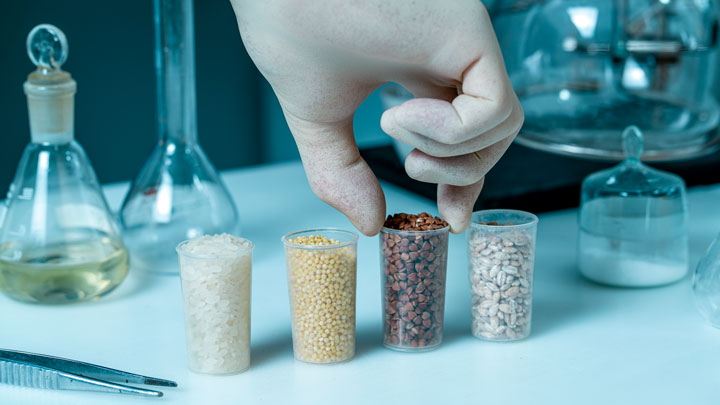
Get it tested!
When buying fodder in significant quantities, always get a feed test and purchase on a dry matter $/energy and protein basis. The four main sections of the feed test to observe are:
- Dry Matter %: Buying water is expensive in more ways than one!
With hay, high moisture may suggest that the hay has not been cured appropriately, may be mouldy and in some cases can cause hay fires. The general rule of thumb for hay is to have a minimum dry matter of 90%, even higher for cereal hays.
Well-sealed silage is a safe option, but consideration must be given to its water content. Moisture should be considered both in purchasing and ration formulation (more on this later).
- Crude Protein%: You want a hay with the highest level of protein you can find at a reasonable price. As a guide, 11 to 14% CP is an acceptable level for silage, whereas hays should be no less than 9% to offer real value to growing livestock.
- Energy (MJME/kg DM): A hay with around 10MJME/kg DM is considered good. If purchasing si
 lage, value can be found in forage testing higher than this.
 - NDF%: This indicates the digestibility of the feed and determines how much of it the animal can eat. The lower the NDF (fibre content), the more digestible and the more feed can be eaten. An NDF of around 55% is quite good for a pasture hay, where as a lucerne hay would average in the low 40’s.
Of course, legume, brassica and specialist fodders can fall outside these parameters.
How can ANP help:
- If already purchased, we can test your fodder – in some cases on the spot while you’re picking up product
- Waiting a week or 10 days for a feed test is way too long
- ANP has the latest NIR feed testing technology on site at our Blaxland rd office
- Feeding recommendations based on quality and quantity of feed
- To help forage buyers and sellers to evaluate fodder, we have constructed the following farm gate fodder value grid on a dry as fed basis.