
As the dry season bites across the eastern states and the long-term outlook predicts more of the same, we need to start planning for a dry winter. The lack of substantial rainfall throughout autumn has seen a marked reduction in pasture quality and quantity, making it difficult to satisfy the energy requirements of pregnant and lactating ewes.
However, there is more to the story than climatic conditions, as a combination of improved husbandry practices through education and better maternal genetics, producers are better able to get higher scanning percentages than they have in the past.
Key Points
- Ewe nutrition is key for lamb survival with energy being of particular importance
- Grain supplementation is the most effective way to boost energy, but how much do you feed?
- Tips for feeding grain to sheep and issues to look out for
- StockMins-EweLamLac + Buffer is a great tool to reduce the risk of acidosis while feeding grain to pregnant ewes
This is great when there’s enough feed available to support multiple-bearing ewes and many more lambs, however, it can quickly become an issue when feed reserves are not available to support livestock requirements.
Ewe nutrition is key for lamb survival
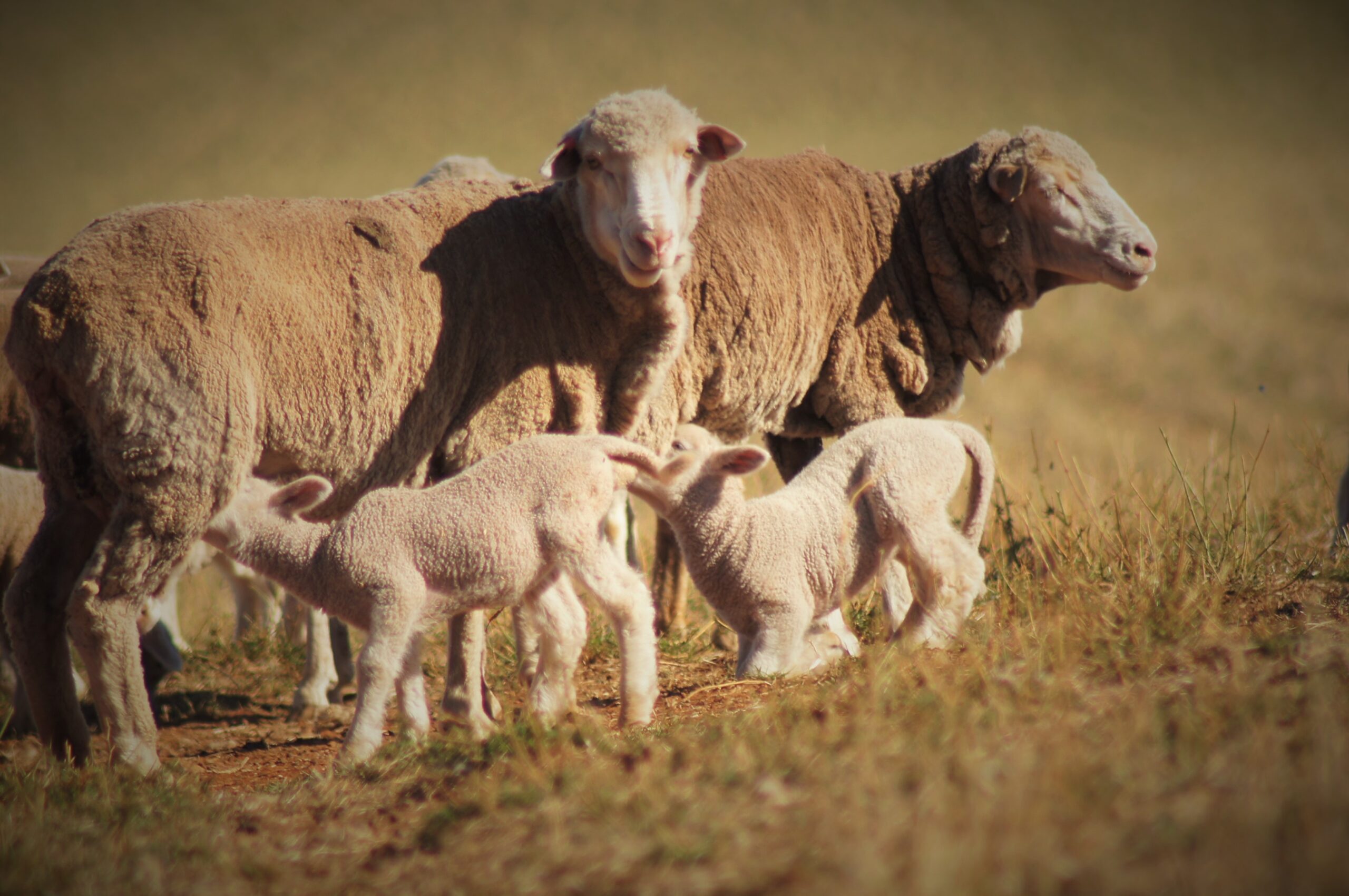
Both pregnancy toxaemia and lamb survival are linked to ewe nutrition, more specifically energy, and the wider the gap between requirements and supply the higher the risk of ewe or lamb mortality. However, there’s a simple solution: supplement pregnant ewes with energy, and by energy, we mean grain, more specifically, barley. Like using a protein source such as beans or lupins to satisfy protein requirements, when pasture energy is limiting, it is common practice to use high-energy grain to boost dietary energy.
How much barley do we feed?
The barley is designed to supplement standing feed already available in the paddock, and therefore is determined by the quality and quantity of available pasture. Given the limited rainfall recently, a standard dry ryegrass pasture would provide 8 MJME/kg DM and have an NDF of around 69%.
Using this as a guide, the table below presents the amount of barley (12.5 MJME/kg DM) required to be fed to get close to the energy requirements of 60kg SRW single-bearing and twin-bearing ewes grazing average dry feed in the weeks leading up to lambing and towards peak lactation.

In situations where quantity of feed is lacking, offering hay (free-access) is highly recommended to help feed the animals to appetite.
While this is a guide to help satisfy the energy requirements of pregnant ewes during late-pregnancy and early-lactation, it is normal for pregnant ewes to lose weight throughout this period. Rapid weight loss is when most issues occur and what we are trying to avoid. In many cases, single-bearing ewes, especially maidens, may not require grain assistance. However, if required, feeding it closer to lambing can reduce the risk of dystocia. On the other hand, even on lush green feed, twin-bearing ewes will benefit from grain feeding, as the boost in energy can assist with lambing and boost milk production during lactation.
Benefits outweigh the pitfalls of feeding grain
Feeding grain to livestock has inherited a bad reputation over the last ten or so years, with many producers experiencing issues with acidosis, “grain poisoning”, mis-mothering and dystocia in single-bearing ewes. However, the string of facts below explains two major reasons why you cannot afford not to feed grain to lambing and lactating ewes.
-
Lamb Survival: Grain = Energy; Energy = Larger Birth Weight; Larger Birth Weight = Higher Lamb Survival (caution when feeding single-bearing ewes before lambing)
-
Lamb Weaning Weight: Grain = Energy; Energy = Milk Production; More Milk = Higher Liveweight Gain = Higher Weaning Weight
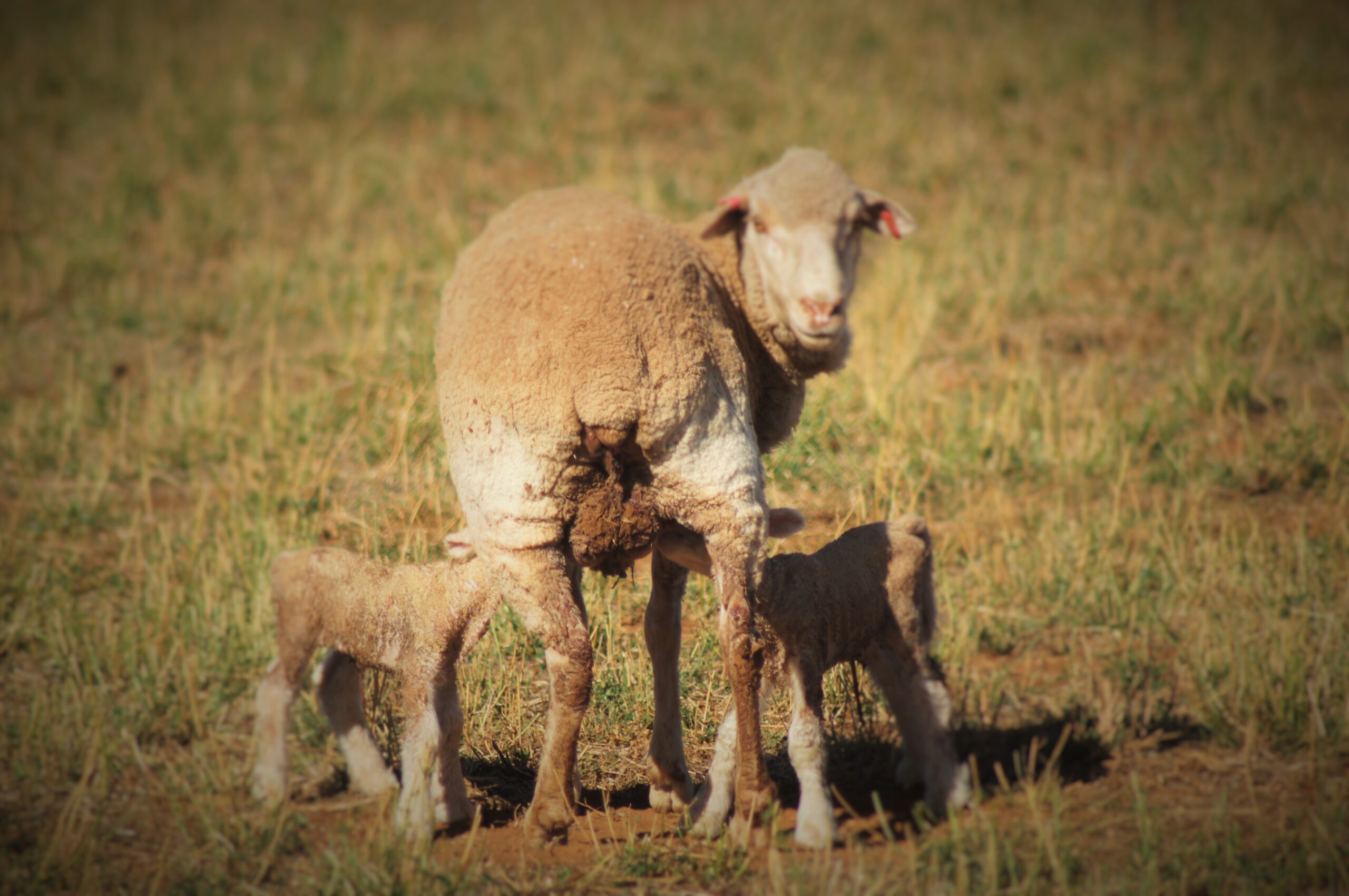
Twin Bearing Merino Ewe in Good Condition
Below we discuss some of the common issues with feeding grain and offer suggestions to help mitigate issues.
Acidosis (grain poisoning)
What is it: Commonly known as “grain poisoning”, acidosis is a disease that is caused by a sudden and excessive intake of grain. This sudden change of feed alters the rumen environment, causing a rapid decrease in the population of rumen microbes responsible for processing starch and sugars and an increase in microbes that produce lactic acid. As a result, rumen pH declines, causing gastrointestinal tract damage and infections.
Symptoms: Loss of appetite, scouring, bloating, dehydration, ill thrift and in severe cases death.
Preventative measures:
- Introduce animals to grain slowly and feed frequently
- Not all grain is the same and therefore should be introduced and fed differently. See ANP’s Technical Note: Introducing Sheep to Grain for a practical guide to low-risk grain feeding.
- Make sure animals have plenty of roughage available. If not standing feed, then offer hay. Animals need to be full. Feeding grain on an empty stomach is a recipe for disaster.
- Feed a supplement with effective buffers that can help stabilise rumen pH, like StockMins-EweLamLac + Buffer
- To help reduce the risk of acidosis, promote ewe health and immunity and support the high nutritional demands of pregnant and lactating ewes, ANP have introduced StockMins-EweLamLac + Buffer.
Mismothering while trail feeding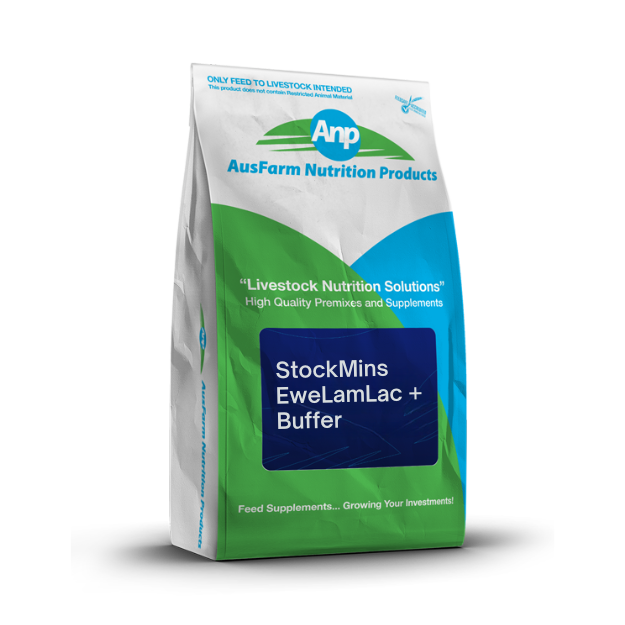
What is it: When trail feeding grain to hungry livestock, they tend to run to the trail in a feeding frenzy. In some cases, ewes will abandon newborn lambs to satisfy their hunger.
Identification: Newborn lambs abandoned in the paddock, causing a higher-than-usual lamb mortality rate.
Preventative measures:
- Make sure that there is enough bulk feed available in the paddock to keep the animals full. Hungry animals run to the trail, and we don’t want this to happen.
- Trail feed in the afternoon. New lambs are usually dropped in the morning and can have a few hours to mother up and warm up before the ewe runs to feed.
- Supplementing with StockMins-EweLamLac + Buffer, an effective containing balanced levels of essential minerals, vitamins and trace elements, can assist with reducing ewe stress and boosting lamb health and immunity, to support lamb survival.
- Trail feed in multiple trails, so the ewes that are late to the trail get a chance to eat the grain.
- Feed pregnant ewes using feeder bins. Trail feed at a measured rate up until the required feeding rate, then use a feeder to deliver the same amount per head per day.
For effective, low-risk strategies on how to feed grain to pregnant and lactating ewes, talk to the AusFarm Nutrition team today.